
Stinging Insects: Safety First
Some stinging insects are aggressive pests. Others are beneficial and protected. Knowing the difference matters.
Health & Safety Considerations
Stinging insects pose serious risks for:
- Children
- Pets
- Individuals with sting allergies
Nest proximity to entryways, play areas, or living spaces increases danger.
Why Stinging Insect Problems Escalate Quickly
- Colonies grow rapidly
- Nest locations are often hidden
- DIY treatments increase aggression
Correct identification and professional control prevent injuries and repeat infestations.
- Yellowjackets
- Bold-Faced Hornets
- Paper Wasps
- Carpenter Bees
- Bumble Bees
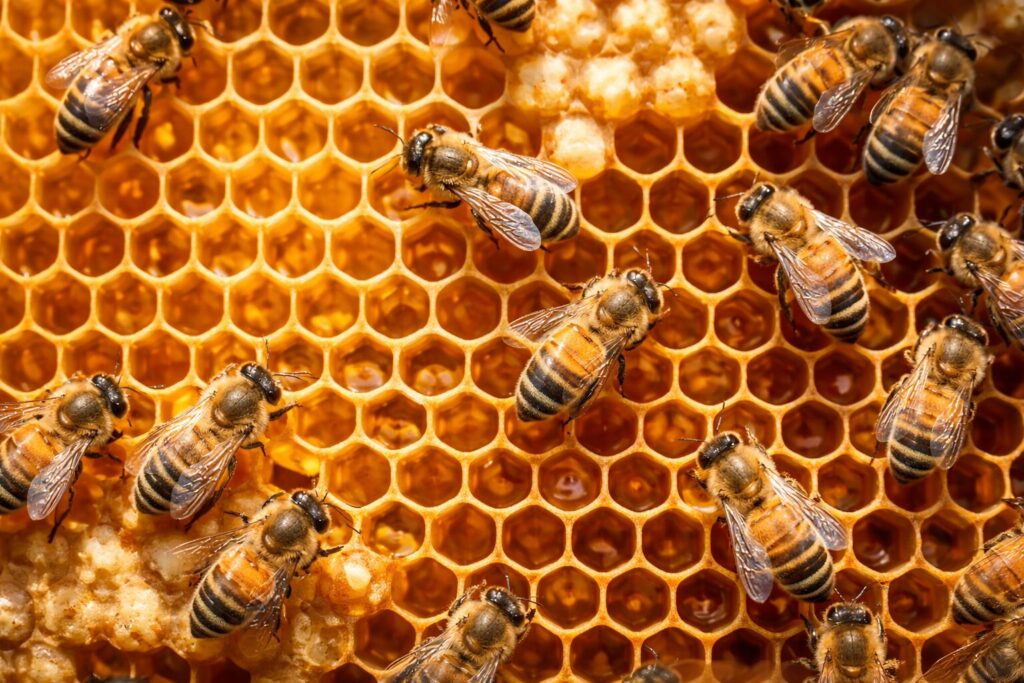
- Honey Bees
- Mud Daubers
YellowJackets
Vespula spp. / Dolichovespula spp.
Identification
- Bright yellow and black markings
- Stocky build
- Fast, aggressive flight
Habitat & Nesting
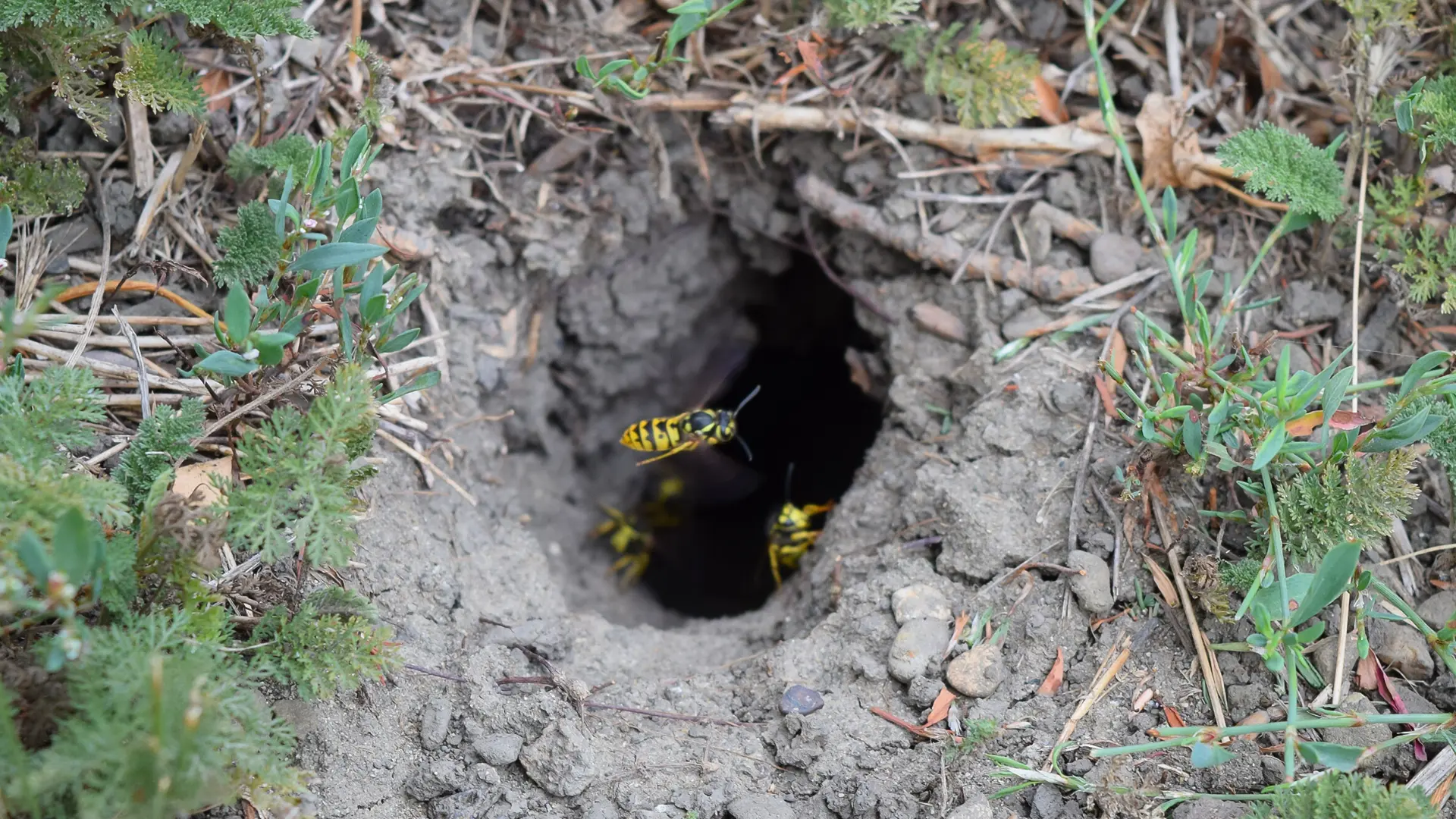
- Underground nests in lawns
- Wall voids
- Mulch beds and landscaping
Behavior & Risk
Yellowjackets are highly aggressive and can sting repeatedly. Lawn nests pose serious risk to children, pets, and anyone mowing or walking nearby.
How We Treat Yellowjackets
- Nest location and confirmation
- Targeted treatments are made at dusk, at the source
- Elimination of colony activity
- Follow-up to ensure complete control
Bald-Faced Hornets
Dolichovespula maculata
Identification
- Black with white facial markings
- Larger than most wasps
- Loud, aggressive flyers
Habitat & Nesting
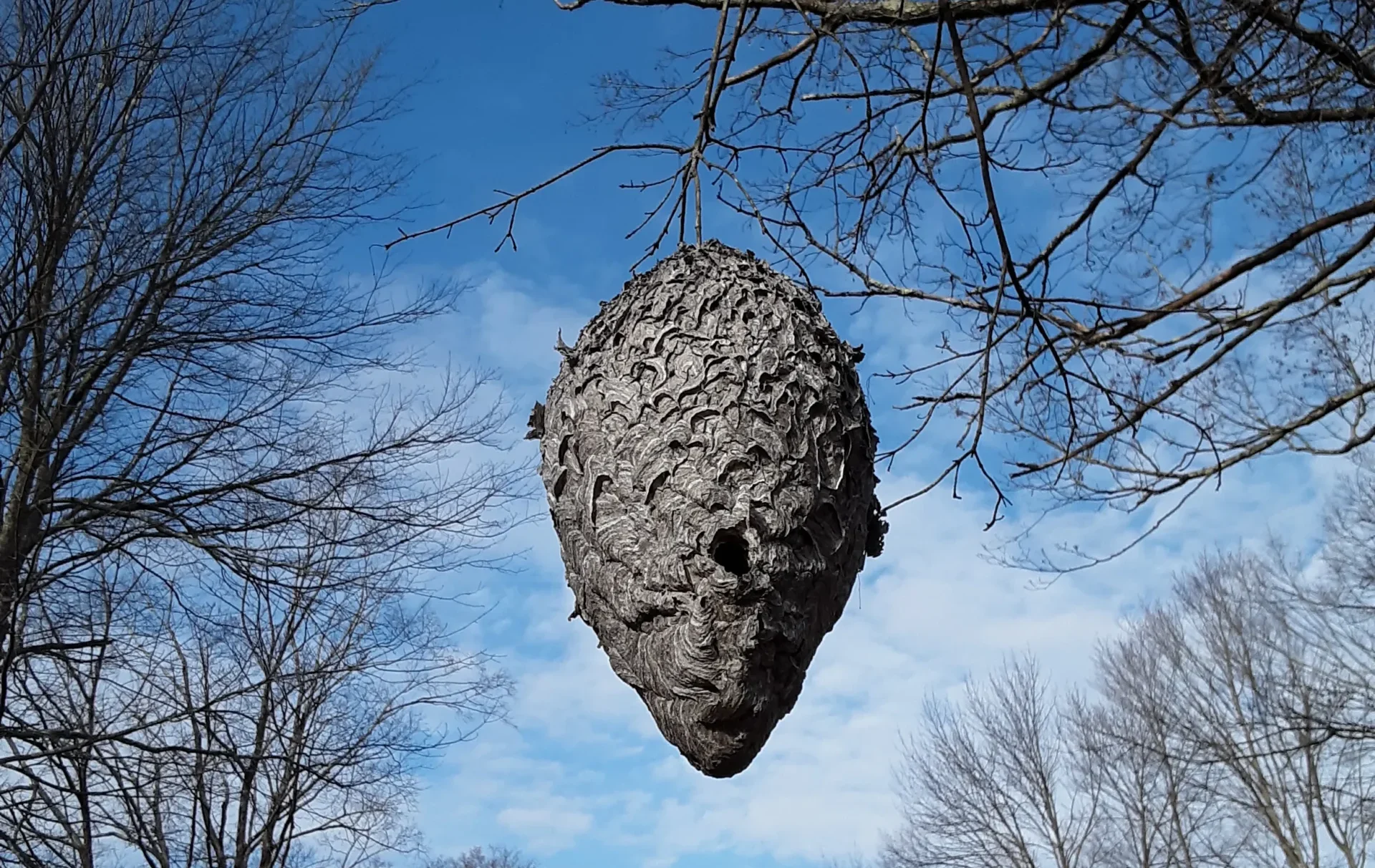
- Large paper nests visible from a distance
- Aerial nests in trees
- Attached to structures
Behavior & Risk
Extremely defensive of their nest. Multiple stings can occur quickly if disturbed.
How We Treat Bald-Faced Hornets
- Controlled nest treatment
- Safe removal when appropriate
- Risk-based approach to protect occupants
Paper Wasps
Polistes spp.
Identification
- Slender bodies with long legs
- Brown, reddish, or yellow markings
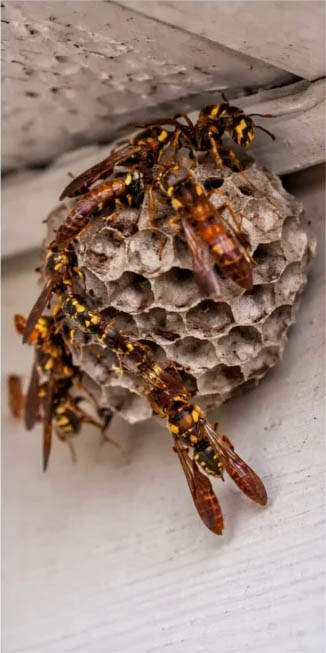
- Umbrella-shaped open comb nests
Habitat & Nesting
- Eaves, soffits, porch ceilings
- Railings and light fixtures
- Attics and sheds
- Playground equipment
Behavior & Risk
Paper wasps are defensive, not aggressive, but will sting if their nest is disturbed. Stings are painful and can be dangerous for allergic individuals.
How We Treat Paper wasps
- Recommendations to prevent re-nesting
- Safe nest removal or elimination
- Targeted treatment of nesting sites
Carpenter Bees
Xylocopa spp.
Identification
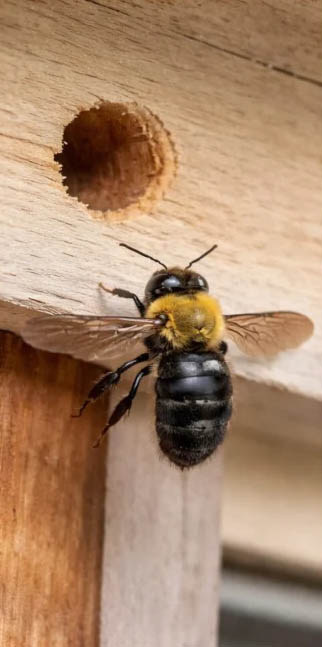
- Large, robust bees
- Shiny black abdomen
- Often mistaken for bumble bees
Habitat & Damage
- Bore into untreated or weathered wood
- Decks, fascia, siding, pergolas
- Leave perfectly round entry holes
Behavior & Risk
Males are aggressive but cannot sting. Females rarely sting but structural damage accumulates over time.
How We Treat Carpenter Bees
- Elimination of active bees
- Treatment of galleries
- Preventative measures to stop re-infestation
Bumble Bees
Bombus spp.
Identification
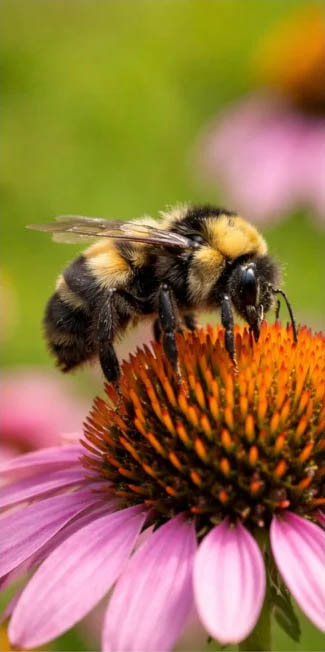
- Large, fuzzy bodies
- Black and yellow coloration
- Slow, heavy flight
Habitat & Damage
- Ground nests
- Old rodent burrows
- Mulch beds and dense vegetation
Behavior & Risk
Generally non-aggressive and important pollinators. Stings are rare unless nests are disturbed.
How We Treat Bumble Bees
- Identification and assessment
- Education and relocation guidance when possible
- Control only when safety is at risk
Honey Bees
Apis mellifera
Beneficial and protected – removal focuses on relocation and safety.
Identification
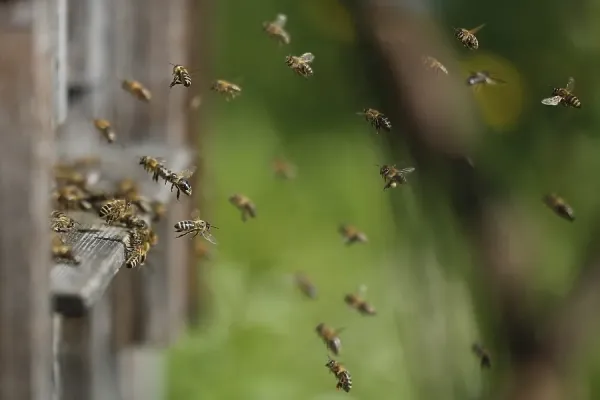
- Medium-sized, golden brown
- Less aggressive than wasps
- Often seen swarming
Habitat & damage
- Wall voids
- Trees
- Structural cavities
Behavior & Risk
Honey bees are beneficial and protected in many situations. Improper removal can cause long-term structural and health issues.
How We Treat honey Bees
- Proper identification
- Education and referral for removal when required
- Safety-first guidance for homeowners
Mud Daubers
Sceliphron spp. / Chalybion spp.
What To Look For
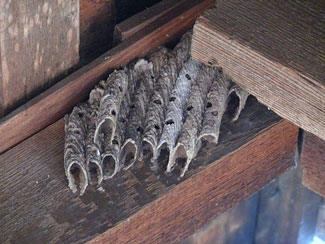
Small wasps flying around porches, garages, barns, sheds, or under eaves. Homeowners often notice mud tube nests attached to walls, ceilings, or corners of structures. The nests look like narrow clay tubes or clumps of dried mud.
Identification
Slender-bodied wasp with a narrow “thread-like” waist. Typically, black or metallic blue, sometimes with yellow markings depending on species. Longer legs and less bulky appearance than paper wasps or hornets.
Health concerns
Low risk. Mud daubers are non-aggressive and rarely sting. They do not defend their nests aggressively like other wasps. Primary concern is nuisance nesting and cosmetic damage from mud buildup.
Habitat & Breeding
Mud daubers build nests out of mud in protected areas such as:
- Inside barns or storage buildings
- Under eaves
- Inside garages or sheds
- On porch ceilings
Each mud tube contains paralyzed spiders that serve as food for developing larvae. Once the larva matures, it pupates inside the sealed mud chamber and later emerges as an adult.
They are solitary wasps — not social colony builders like yellowjackets or hornets.
How We Treat Carpenter Bees
- Proper identification
- Education and referral for removal when required
- Safety-first guidance for homeowners
Because they are beneficial predators of spiders, control is usually focused on problem nesting areas only, rather than broad elimination.