
Flies: What They Tell You
Flies are symptoms, not just pests. Each species points to a different underlying issue.
Fruit Flies
Drosophila melanogaster
What To Look For
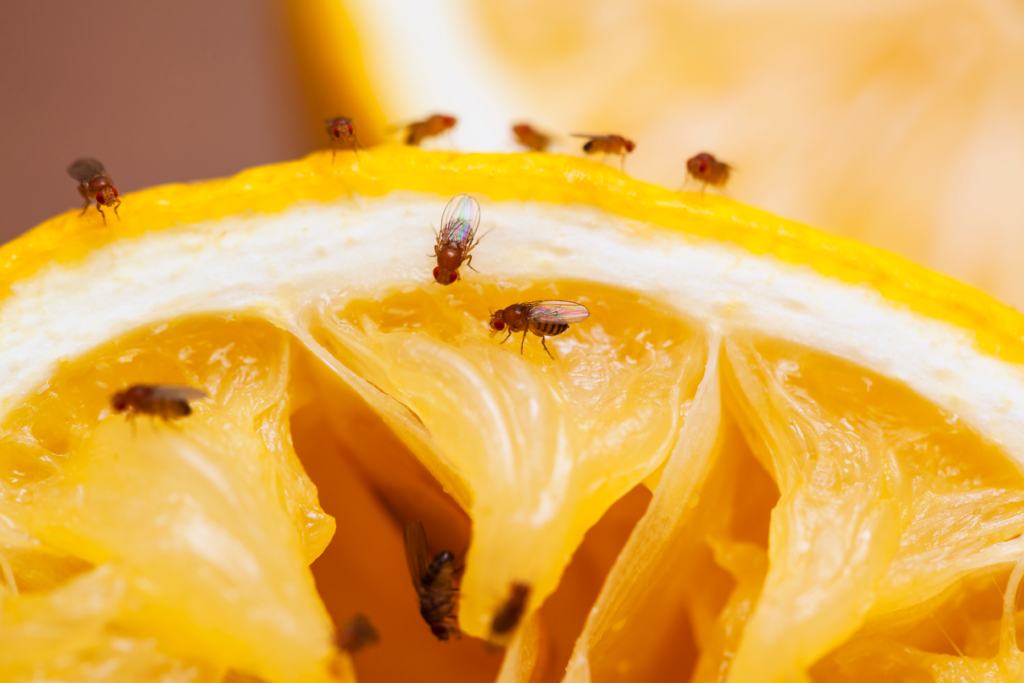
They’re commonly described as “tiny flies with red eyes” that reappear no matter how often the kitchen is cleaned.
- Fruit bowls
- Trash cans
- Sinks and disposals
Identification
Fruit flies are often confused with phorid or drain flies, but their attraction to fermenting food sources is a key indicator.
- Very small (about 1/8 inch)
- Tan to light brown body
- Distinct red eyes
- Quick, erratic flight
Habitat & Breeding Source
Eggs hatch quickly, which is why populations explode in a short time.
- Overripe fruits and vegetables
- Sugary spills and residues
- Trash cans and recycling bins
- Sink disposals and mop buckets
Health & Sanitation Concerns
In commercial kitchens, they are a common inspection violation.
- Contaminate food surfaces
- Spread bacteria from waste to clean areas
- Signal sanitation or moisture issues
How We Treat Fruit Flies
Once the food source is removed, fruit flies cannot survive.
- Identification of breeding material
- Targeted treatment of affected areas
- Sanitation and moisture recommendations
- Monitoring to ensure full population collapse
Effective control requires source elimination, not spraying. Our process includes:
Why Fruit Flies Keep Coming Back
- Multiple breeding sites exist
- Eggs remain in hidden organic material
- Cleaning addresses symptoms, not sources
Phorid Flies (Humpback Flies)
Megaselia scalaris
What To Look For
They are especially common in restaurants and bars.
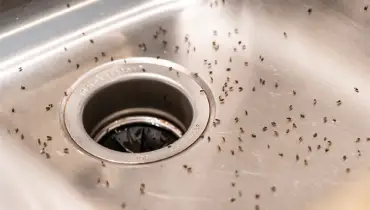
- Flies near sinks or under cabinets
- Activity in kitchens or bathrooms
- Sudden appearance after plumbing or moisture issues
Identification
Their movement pattern is one of the easiest ways to identify them.
- Small, dark-colored flies
- Erratic movement; prefers running over flying
- Distinct humpbacked thorax
- Often mistaken for fruit flies
Habitat & Breeding Source
They are classified as filth flies, not nuisance flies.
- Food debris under appliances
- Moist organic buildup beneath cabinets
- Damaged plumbing or sewer leaks
- Floor drains and void spaces
Health & Sanitation Concerns
Their presence often points to a deeper issue that requires investigation.
- Indicate unsanitary conditions
- Are associated with decay and moisture problems
- Can spread bacteria in food environments
How We Treat Phorid Flies
Without removing the source, phorid flies will continue to reappear.
- Inspection to identify hidden breeding material
- Moisture and plumbing evaluation
- Targeted treatment of active zones
- Elimination of organic buildup
Why Phorid Flies Are Often Misdiagnosed
Because they resemble fruit flies, many treatments fail. Incorrect identification leads to:
- Repeated infestations
- Wasted treatments
- Ongoing sanitation issues
Cluster Flies
Pollenia rudis
What To Look For
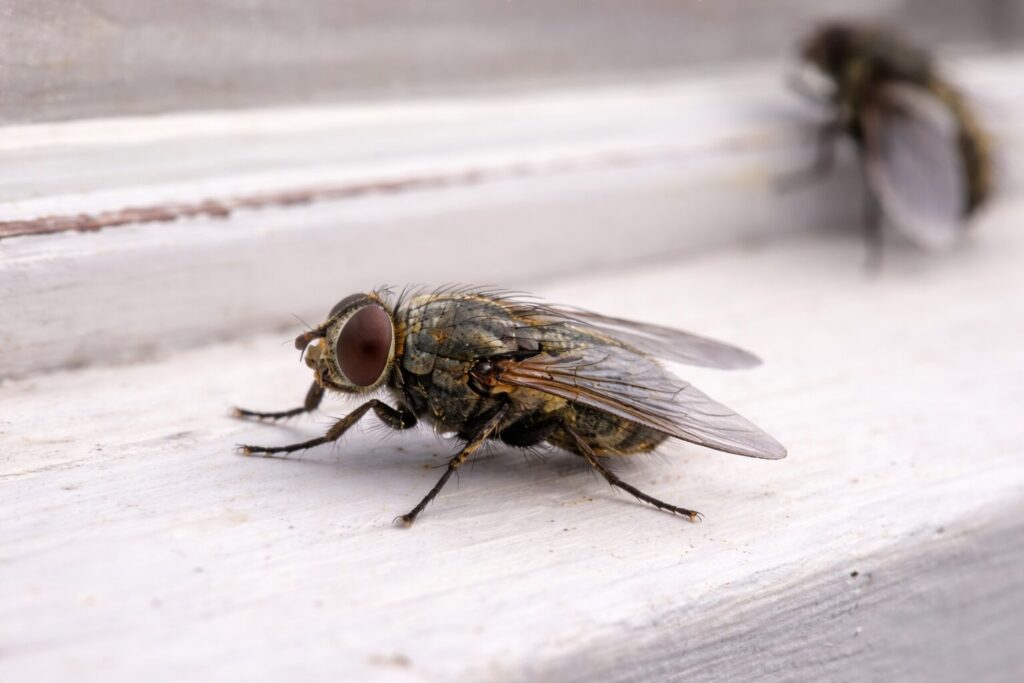
They are slow-moving and easy to spot.
- Gathering on windows
- Appearing indoors during warm winter days
- Emerging suddenly in large numbers
Identification
They do not behave like typical breeding flies.
- Larger than house flies
- Dark gray body with golden hairs
- Slow, lazy flight
- Often found in groups
Habitat & Breeding Source
They do not breed inside homes.
- Breed outdoors in soil
- Lay eggs near earthworms
- Enter structures to overwinter
Health & Sanitation Concerns
- Are a significant nuisance
- Leave staining and droppings
- Can cause recurring seasonal issues
How We Treat Cluster Flies
Control focuses on exclusion and prevention. Spraying indoors alone is ineffective long-term.
- Identification of entry points
- Interior removal of active flies
- Exterior treatments when appropriate
- Recommendations to reduce future entry
Why Cluster Flies Return Each Year
If entry points remain open, cluster flies will continue using the structure as shelter during seasonal changes.
Blue Bottle Flies / Flesh Flies
Calliphora vomitoria / Family Sarcophagidae
What To Look For
They often appear suddenly and in alarming numbers.
- Loud buzzing
- Large size
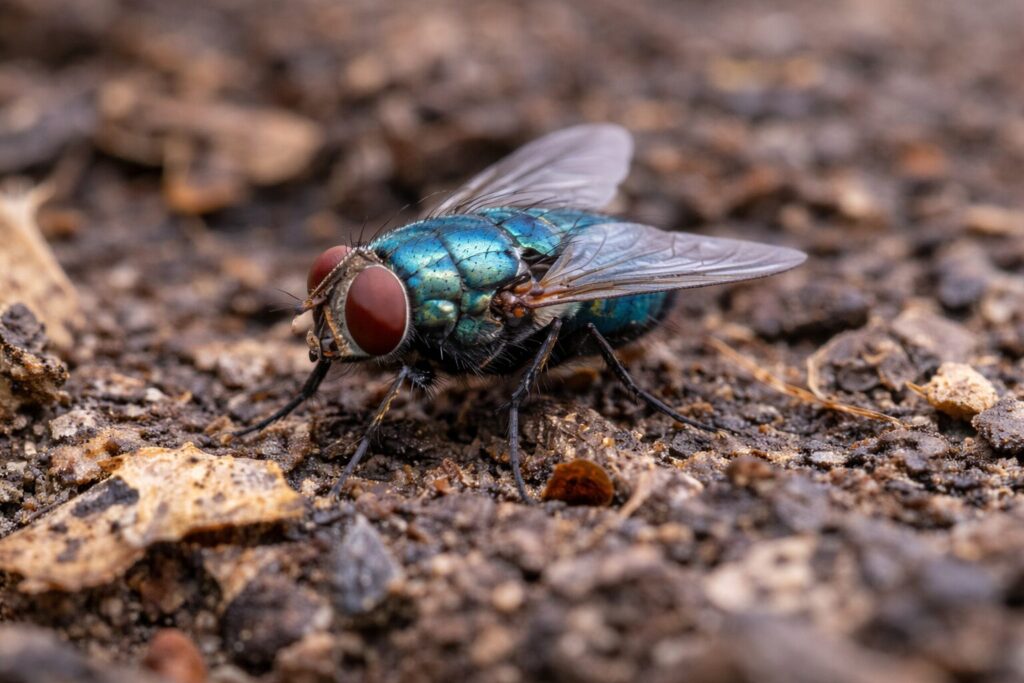
- Metallic blue or gray bodies
Identification
- Larger than house flies
- Blue bottle flies: metallic blue/green sheen
- Flesh flies: gray with dark stripes
- Strong, fast flyers
Habitat & Breeding Source
Indoor infestations often indicate a hidden carcass.
- Decaying organic matter
- Dead animals in walls or crawlspaces
- Garbage and waste areas
Health & Sanitation Concerns
Their presence should never be ignored.
- Spread bacteria
- Contaminate surfaces
- Signal serious sanitation or decay issues
How We Treat Blue Bottle & Flesh Flies
Once the source is removed, activity drops quickly.
- Inspection to locate decay or carcasses
- Removal of breeding material when accessible
- Targeted treatment to control adults
- Recommendations to prevent recurrence
Why These Flies Appear Suddenly
These species can detect decay from long distances. When they show up indoors, there is almost always an underlying cause.
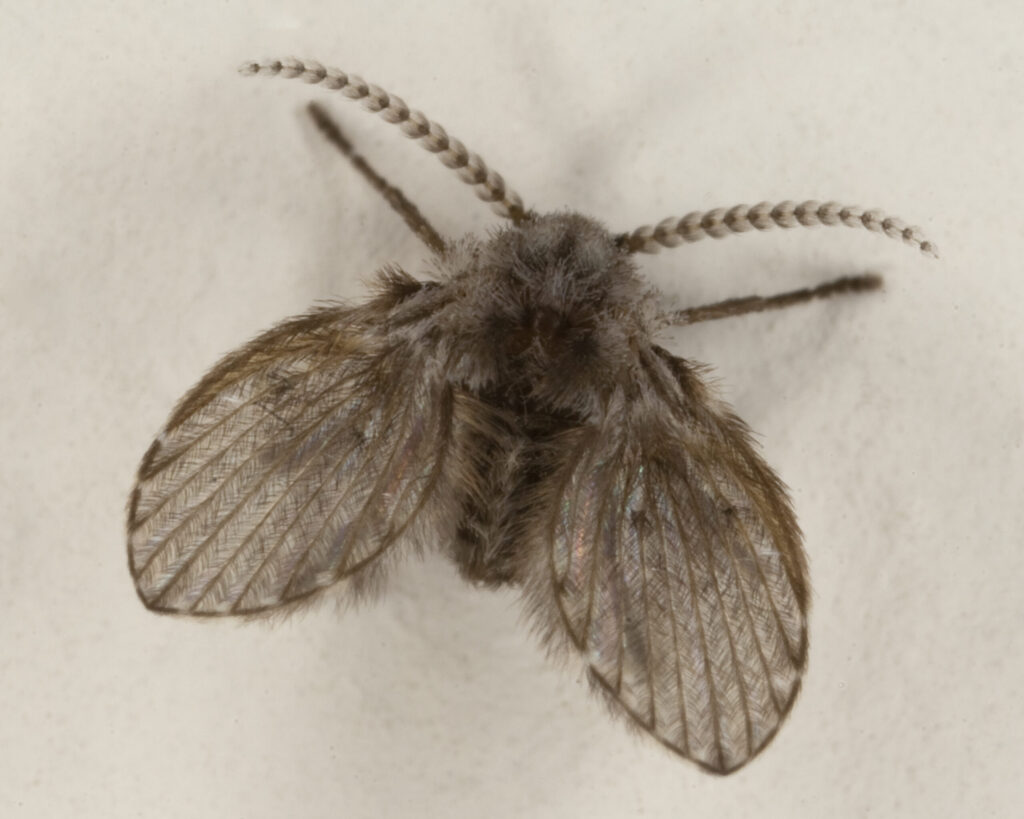
Drain Flies (Moth Flies)
Clogmia albipunctata
What To Look For
Drain flies are often noticed resting on bathroom walls, hovering near sinks, tubs, or floor drains, or appearing repeatedly even after cleaning. They don’t move fast and tend to sit still, especially on smooth surfaces like tile or mirrors.
- Tiny fuzzy flies
- Little moth-looking bugs
- Flies that won’t go away no matter how much you clean
Identification
- Small (about 1/8 inch)
- Fuzzy or hairy appearance
- Wings held roof-like over the body
- Gray, tan, or brown coloration
- Weak flyers; often hop or flutter short distances
Habitat & Breeding Source
The larvae live inside the biofilm lining the pipe walls, which is why surface sprays or fly swatters don’t solve the problem.
- Sink and tub drains
- Floor drains
- Condensate lines
- Grease buildup inside pipes
- Leaking plumbing beneath cabinets
Health & Sanitation Concerns
In commercial environments (restaurants, bars, healthcare), they can raise sanitation concerns and trigger failed inspections.
- Organic buildup
- Moisture issues
- Unsanitary conditions inside plumbing lines
How We Treat Drain Flies
Once the breeding material is eliminated, adult drain flies disappear naturally.
- Identification of active breeding drains
- Inspection of plumbing and moisture sources
- Removal or treatment of organic buildup inside pipes
- Targeted applications designed to break down biofilm
- Follow-up recommendations to prevent recurrence
Why Drain Fly Problems Keep Returning
If flies keep coming back after cleaning, the breeding source hasn’t been addressed.
- Kill only visible adults
- Don’t reach larvae inside the pipe walls
- Miss secondary or hidden drains