Most ants aren’t treated the same, and treating the wrong species the wrong way often makes the problem worse. Alabama is home to several ant species with very different nesting habits, behaviors, and risks.
This page helps you identify the ant you’re seeing and understand why it’s there, so the solution actually works.
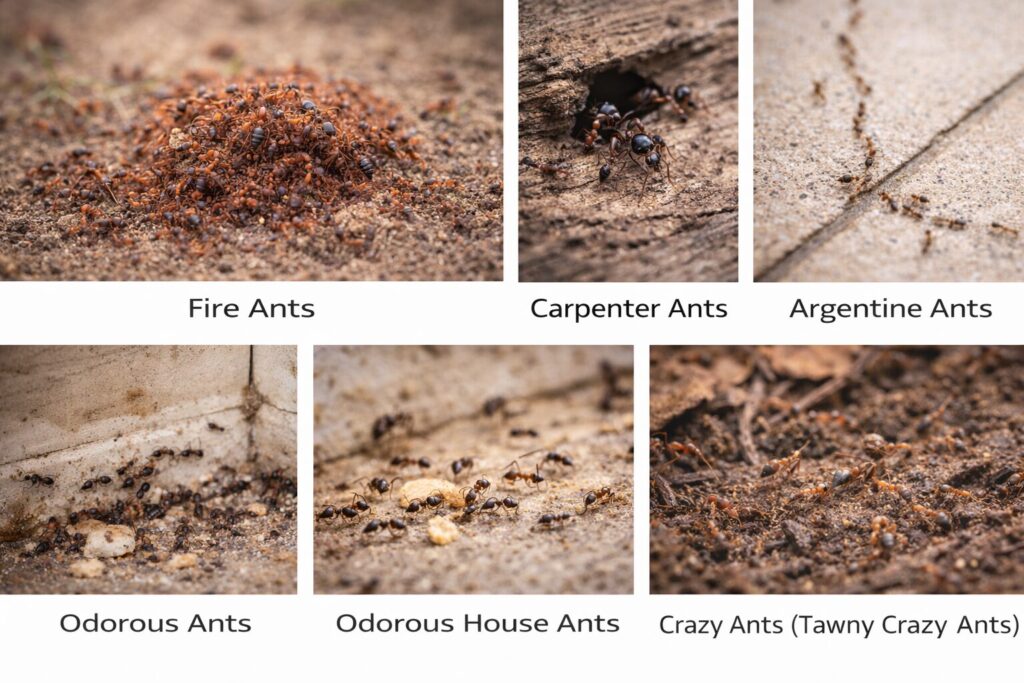
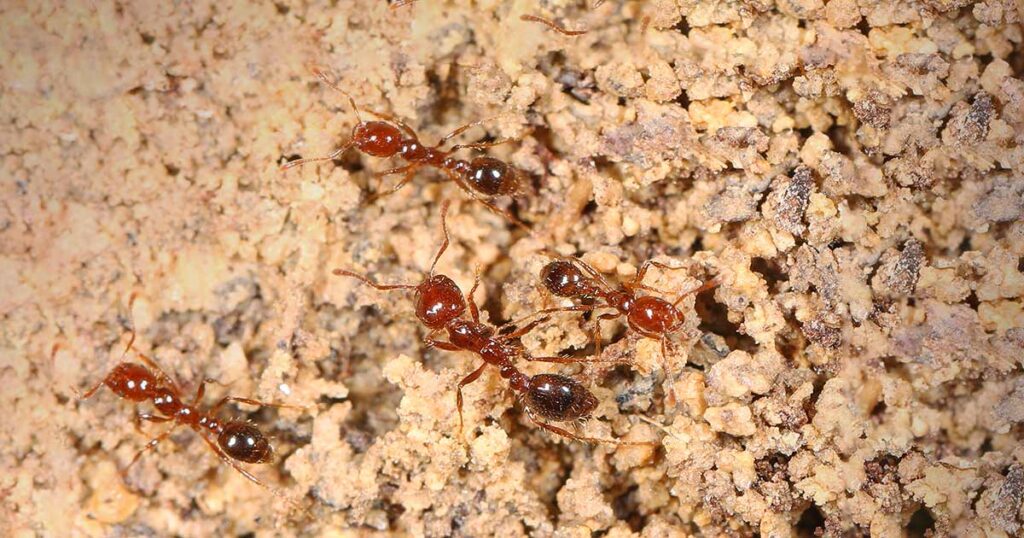
Fire Ants
Solenopsis invicta
WHAT TO LOOK FOR
Mounds in lawns, painful stings, aggressive swarming behavior indoors or outdoors.
WHY THEY’RE A PROBLEM
Fire ants pose real health risks, especially to children and pets.
HOW WE TREAT THEM
Colony-level baiting and strategic exterior treatments designed to eliminate the colony, not just the ants you see.
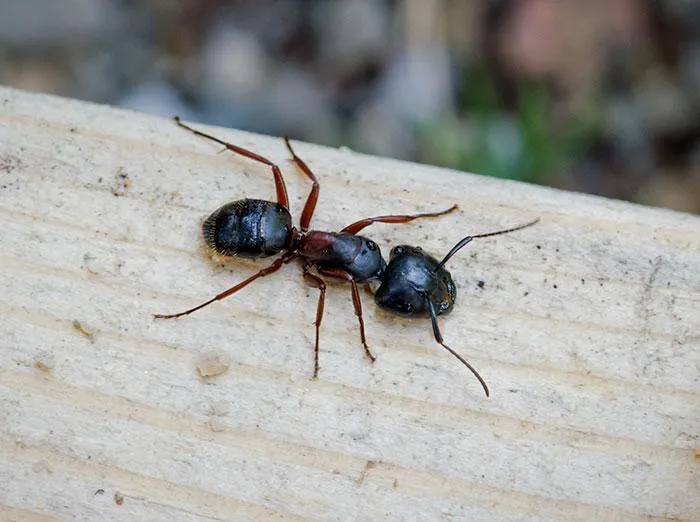
Carpenter Ants
Camponotus spp.
WHAT TO LOOK FOR
Large black ants indoors, often near windows or moisture-damaged wood.
WHY THEY’RE A PROBLEM
Carpenter ants don’t eat wood, they excavate it, often indicating moisture or structural issues.
HOW WE TREAT THEM
Targeted nest location, moisture correction, and precision treatment; no surface spraying.
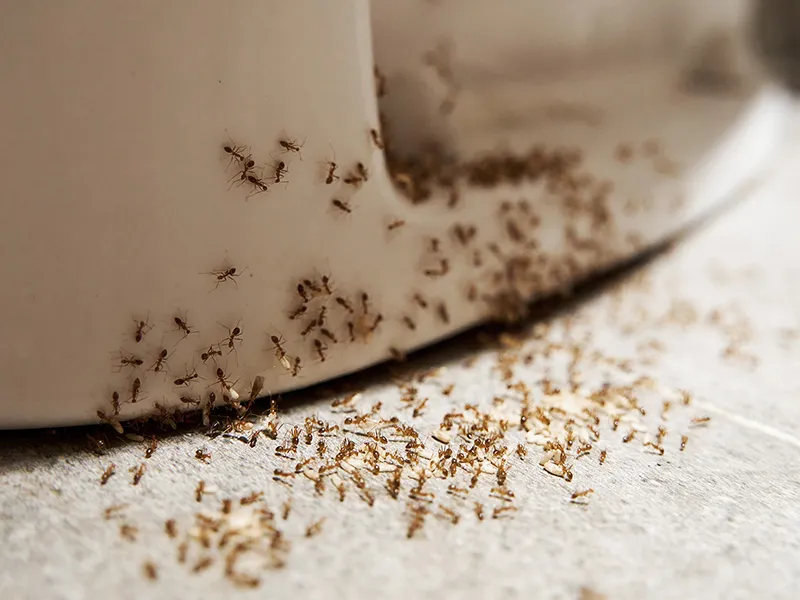
Odorous House Ants
Tapinoma sessile
WHAT TO LOOK FOR
Small ants trailing along walls or counters; smell like rotten coconut when crushed.
WHY THEY’RE A PROBLEM
Sprays cause colonies to split (bud) and spread.
HOW WE TREAT THEM
Non-repellent, colony-focused strategies designed to collapse the entire population.
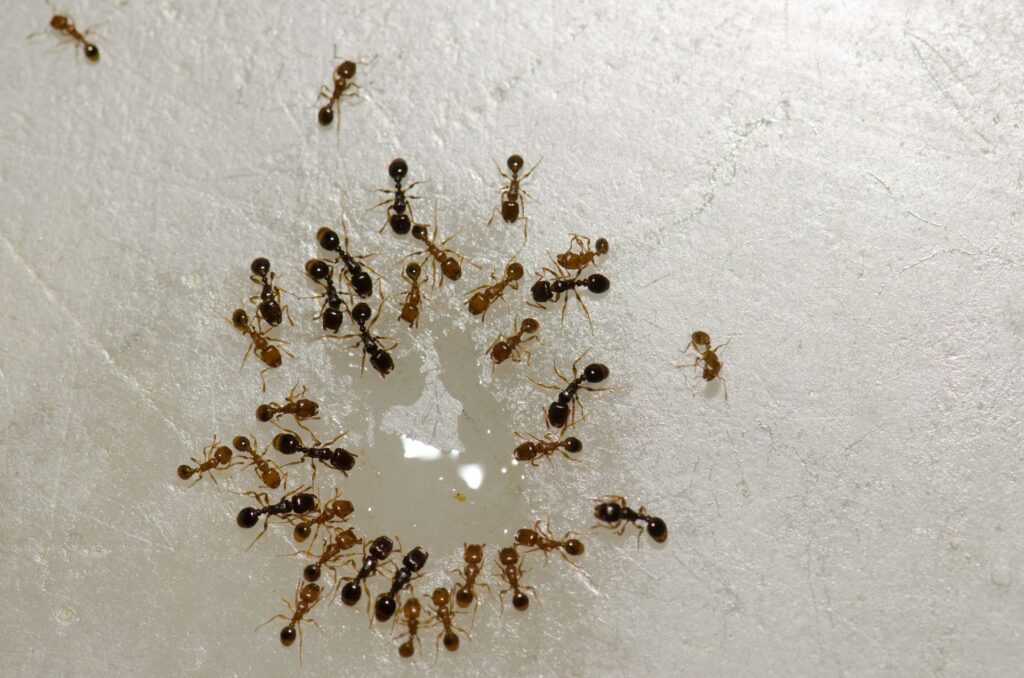
Argentine Ants
Linepithema humile
WHAT TO LOOK FOR
Massive trails, persistent reinfestation, heavy outdoor-to-indoor pressure.
WHY THEY’RE A PROBLEM
They form super colonies, killing a few does nothing.
HOW WE TREAT THEM
Broad-scale baiting and perimeter control designed for large colony systems.
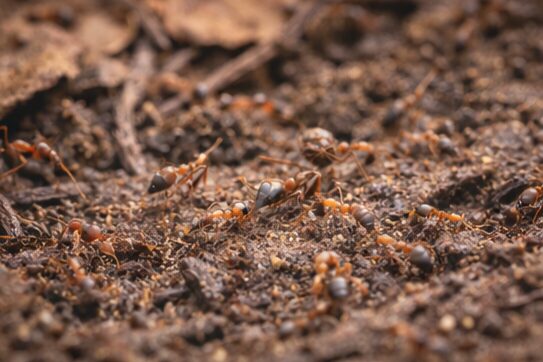
Tawny Crazy Ants
Nylanderia fulva
WHAT TO LOOK FOR
Erratic movement, electrical issues, heavy outdoor activity.
WHY THEY’RE A PROBLEM
Highly invasive and resistant to standard control.
HOW WE TREAT THEM
Specialized baiting and long-term management plans.