
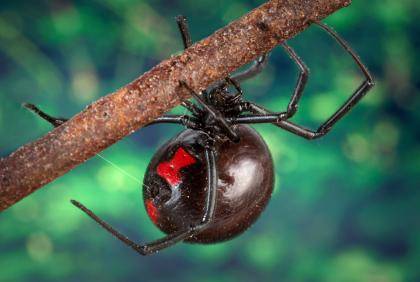
Black Widow Spider
Latrodectus spp.
What to look for
Webs near ground level in garages, crawlspaces, sheds, and outdoor clutter.
Identification
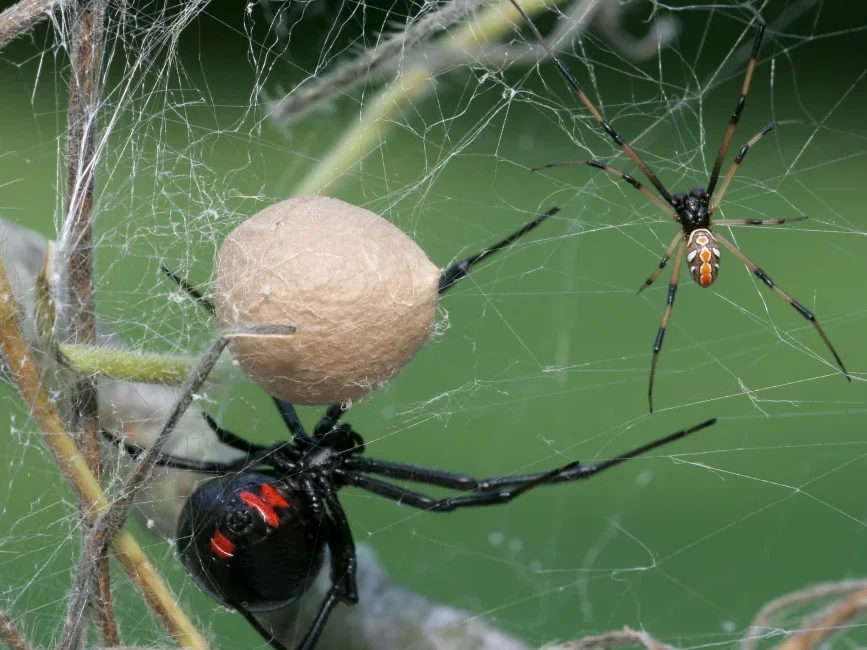
Glossy black spider with a red hourglass marking on the underside of the abdomen.
Habitat & Breeding
Prefers dark, undisturbed areas. Egg sacs may contain hundreds of spiderlings.
Health Concerns
Medically significant. Venom affects the nervous system; bites require medical evaluation.
How We Treat Them
Removal of harborages, targeted residual treatments, and exterior perimeter control.
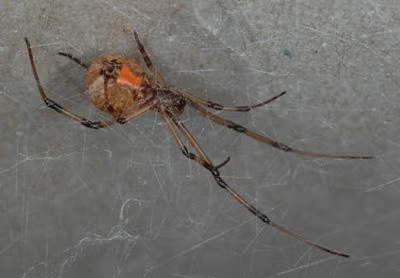
Eastern Brown Widow
Latrodectus geometricus
What to look for
Often found outdoors rather than inside the living space. Homeowners commonly notice messy webs around eaves, patio furniture, storage sheds, mailboxes, grills, utility boxes, and fence lines. The spider itself is usually hidden and not immediately visible.
Identification
Medium-sized spider with a mottled tan, brown, gray, and orange body. The underside features an orange to yellow hourglass marking, which is often less vivid than that of a black widow. Legs are banded rather than solid black.
Habitat & Breeding
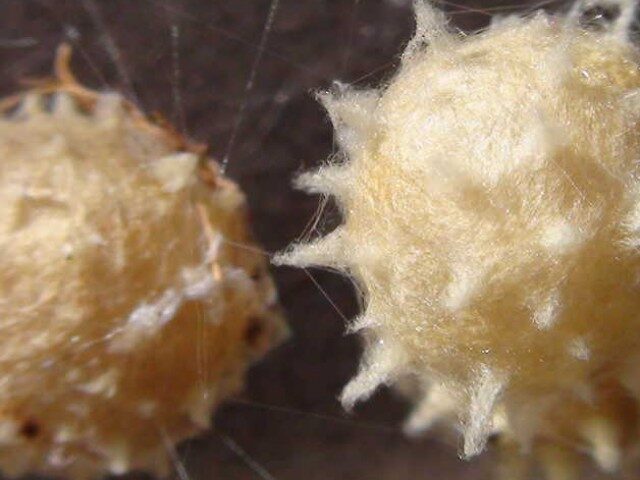
Prefers warm, protected exterior locations near structures. Egg sacs are a key identifier — light tan with spiky or tufted projections, unlike the smooth egg sacs of black widows. Reproduces readily in undisturbed outdoor environments.
Health Concerns
Medically significant. Venom is similar to that of the black widow but typically less potent. Bites are uncommon and usually occur when the spider is accidentally disturbed or handled.
How We Treat Them
We focus on exterior inspections, removal of webs and egg sacs, habitat modification, and targeted residual treatments around structural entry points and known harborages to reduce populations and prevent migration indoors.
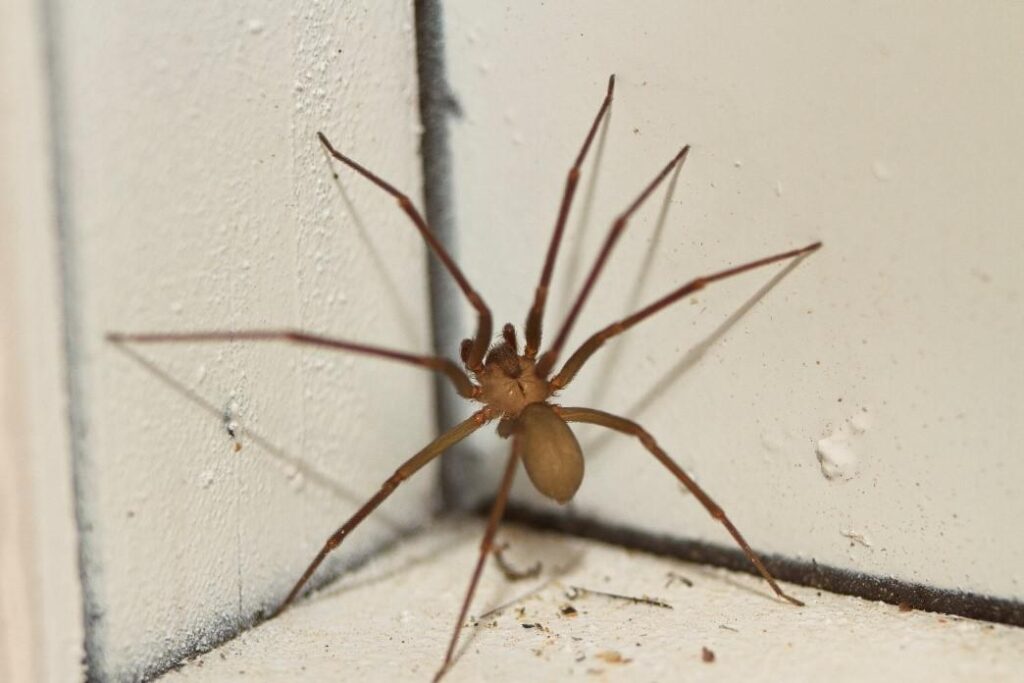
Brown Recluse
Loxosceles reclusa
What to look for
Rarely seen. Often discovered in storage areas, closets, or when unpacking boxes.
Identification
Light to dark brown with a violin-shaped marking on the back. Long slender legs.
Habitat & Breeding
Prefers undisturbed areas such as attics, crawlspaces, closets, and stored items. Egg sacs are hidden and difficult to detect.
Health Concerns
Medically significant. Bites can cause tissue damage and require medical attention.
How We Treat Them
Focused inspections, crack-and-crevice treatments, dust applications in voids, and exclusion work. Education is key to reducing risk.
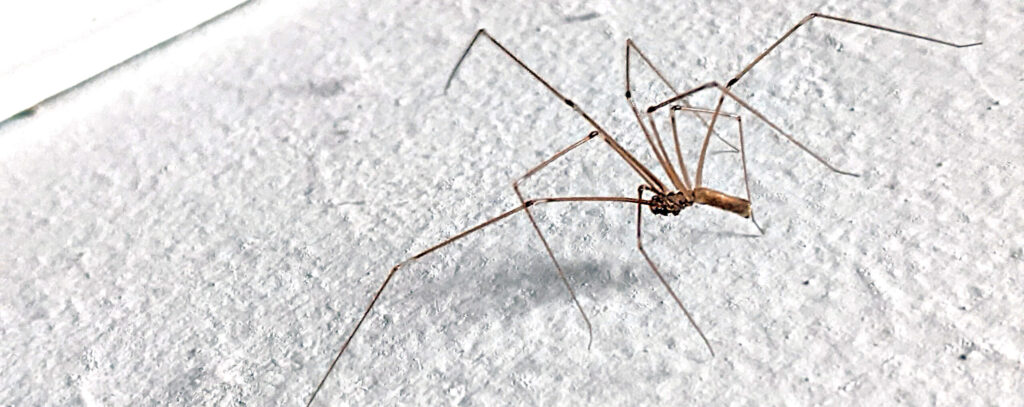
Cellar Spider (Daddy Longlegs)
Harvestmen – Opiliones
What to look for
Long-legged spiders hanging in corners of basements, crawlspaces, or utility rooms.
Identification
Small body with extremely long, thin legs. Pale tan or gray in color.
Habitat & Breeding
Thrives in damp, dark areas. Egg sacs are carried in the female’s mouthparts until they hatch.
Health Concerns
Completely harmless to humans.
How We Treat Them
Moisture control, web removal, and residual treatments in problem areas.